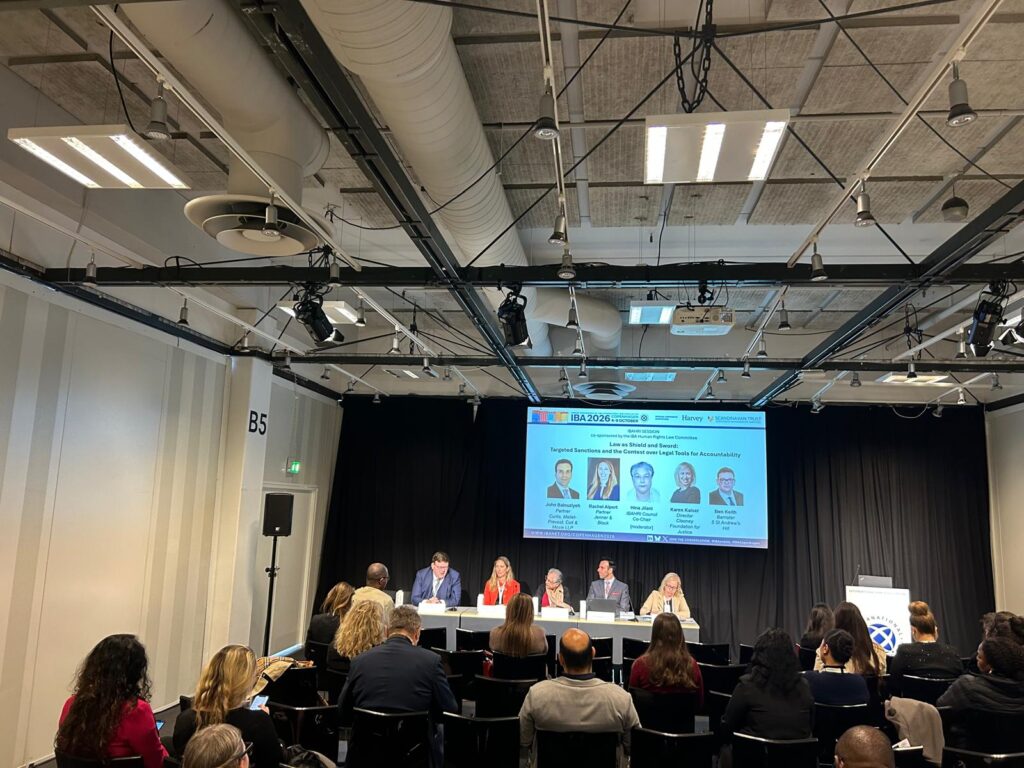
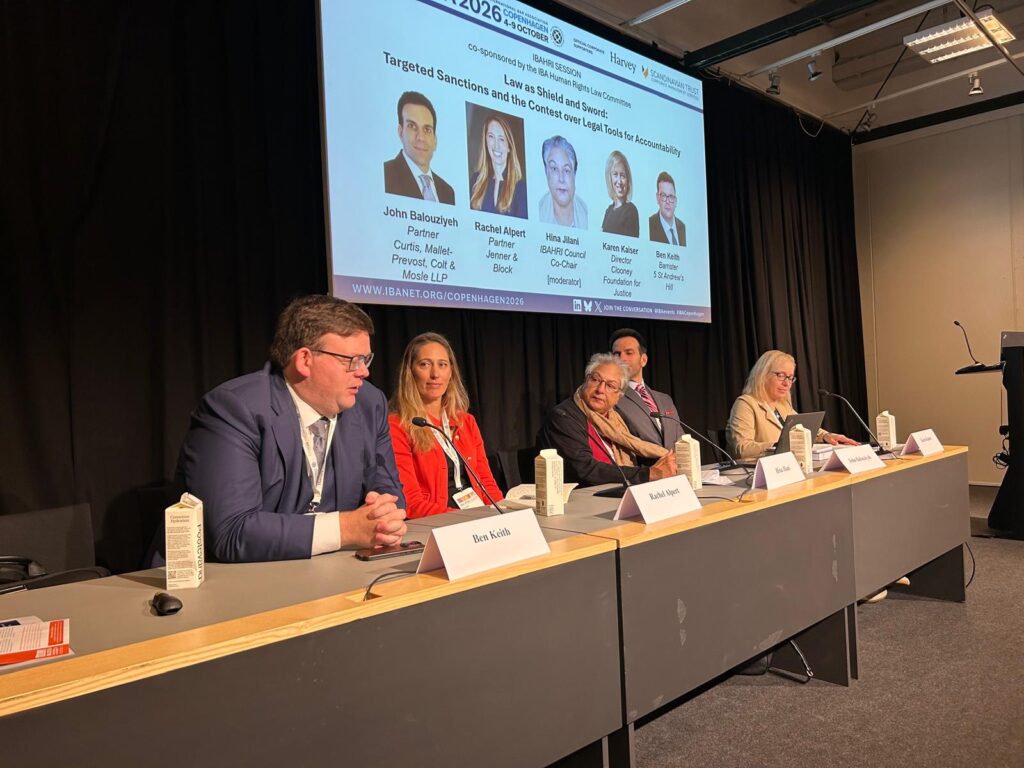
How did targeted sanctions develop?
Targeted sanctions are asset freezes, travel bans and financial restrictions aimed at named individuals or entities rather than at a whole country. Hina Jilani opened with their legal root in Article 41 of the UN Charter. She also recalled Kofi Annan’s 1997 warning about the harm that countrywide sanctions inflict on civilian populations.
Rachel Alpert traced how sanctions moved from territory to individuals. During the Cold War the UN imposed sanctions only on Southern Rhodesia and South Africa. Security Council Resolution 1267 in 1999 created the first list of named individuals, aimed at the Taliban. Activity-based programmes followed after September 11, covering terrorism, cartels and, later, human rights abuse and corruption. She noted that the US Global Magnitsky programme refers to “serious human rights abuse” and not to the international law standard. That drafting choice, she said, has made designations possible that sit uneasily with international law. Her examples were the 2025 designation of Brazilian Supreme Court Justice Alexandre de Moraes and the sanctions regime aimed at the International Criminal Court.
John Balouziyeh described the opposite extreme. Syria was designated a State Sponsor of Terrorism in 1979 and stayed on the list until its recent removal. The designation stripped Syria of sovereign immunity in US courts. The resulting default judgments are counted in tens of billions of dollars. On his estimate, the claims still pending could take the total to between $700 and $800 billion, against a Syrian economy of around $21 billion a year.
Karen Kaiser turned to journalists. She described how governments now use tax and fraud charges against reporters, giving the cases of Maria Ressa and Jimmy Lai. She also described strategic lawsuits, such as the dozens of defamation claims Daphne Caruana Galizia was fighting when she was killed. She listed Red Notices among the tools of transnational repression. And she made the case, following the High Level Panel of Legal Experts on Media Freedom, for Magnitsky-style sanctions against those who attack the press.
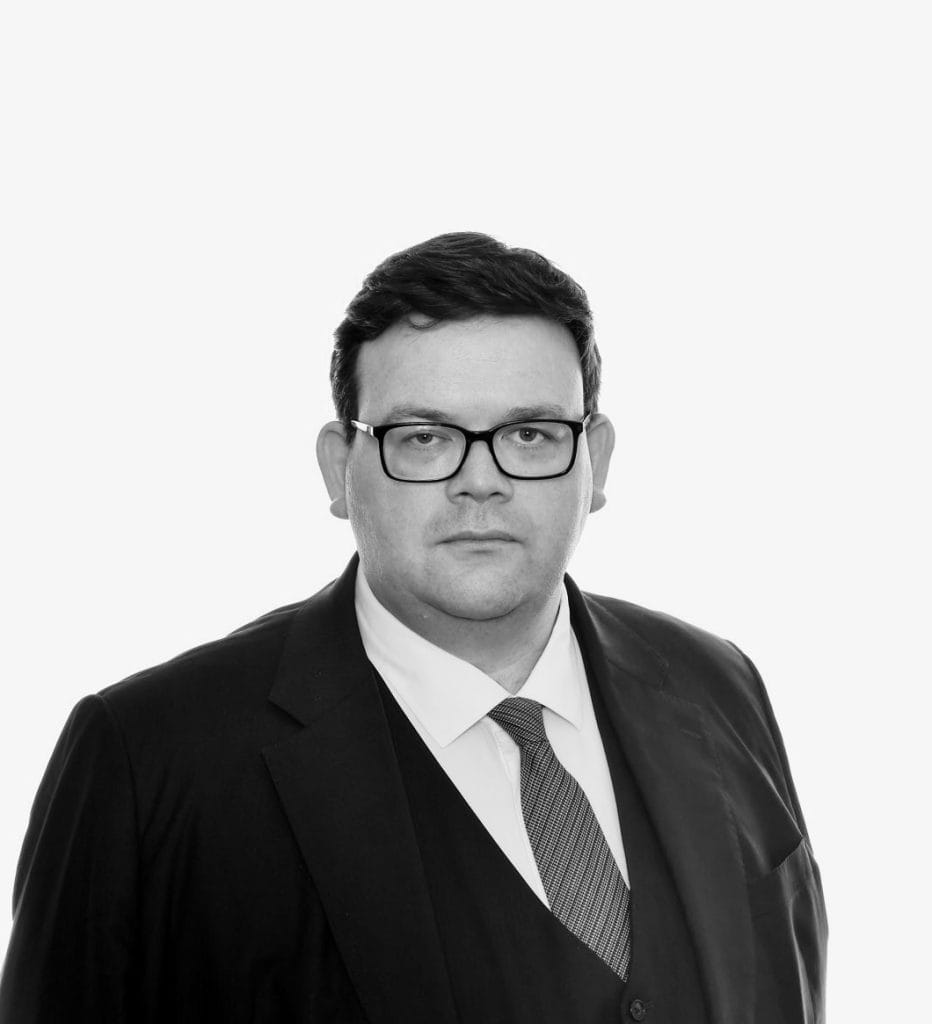
What did Ben Keith argue about Magnitsky sanctions?
Magnitsky sanctions are designations aimed at individuals responsible for gross human rights abuse or serious corruption. Bill Browder campaigned for them after the death of his employee Sergei Magnitsky in Russian custody in 2009. Ben has worked alongside Browder, and he gave the regimes credit for reaching the statute books in the United States, the United Kingdom, the European Union and Canada.
His concern was with how they are used. Sanctions, he said, are only as good as the people applying them, and too often they are a ‘lazy part of foreign policy’. They are imposed without thought for the consequences. The lists catch the obvious targets, such as terrorist leaders and drug traffickers, and few others. Heads of state and senior politicians are rarely listed. The individual named is badly hurt, and the regime behind them is barely touched.
He set two cases side by side. Sanctioning a Brazilian Supreme Court justice meant one government attacking another state’s sovereign judiciary. The designations of Georgian judges, prosecutors and security officials rested on much stronger evidence of corruption and election interference. Even so, Ben argued, they have achieved little and may have backfired. They gave the Georgian Dream government a story of Western interference, which it has used to justify its turn towards Moscow. And where sanctions follow personal grievance, as with the current US measures against the ICC, they become ‘revenge rather than an agent for change’.