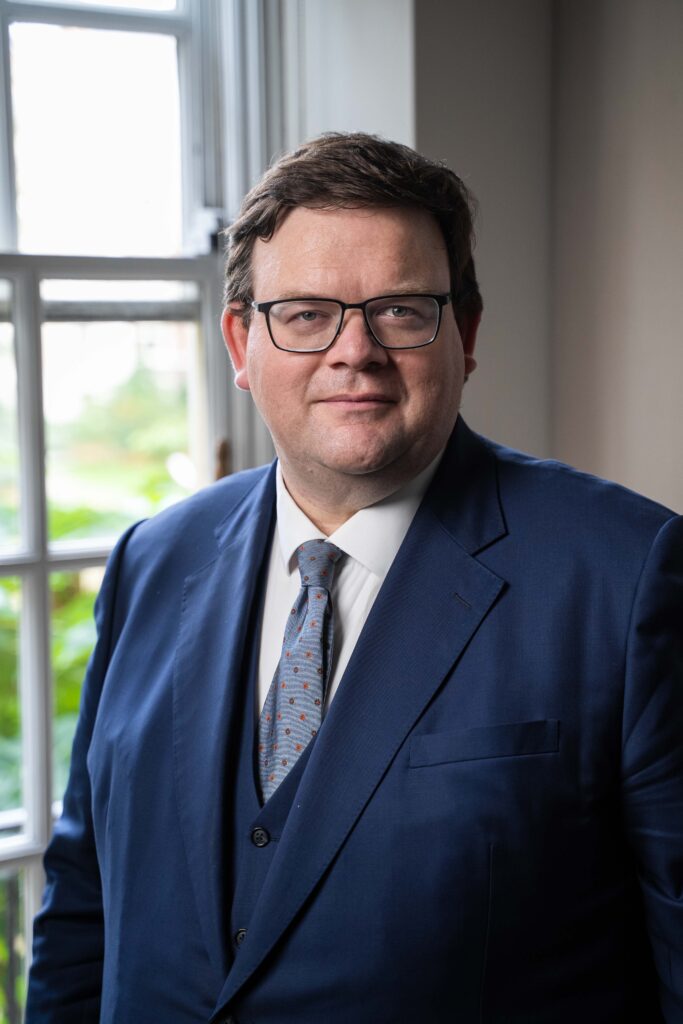
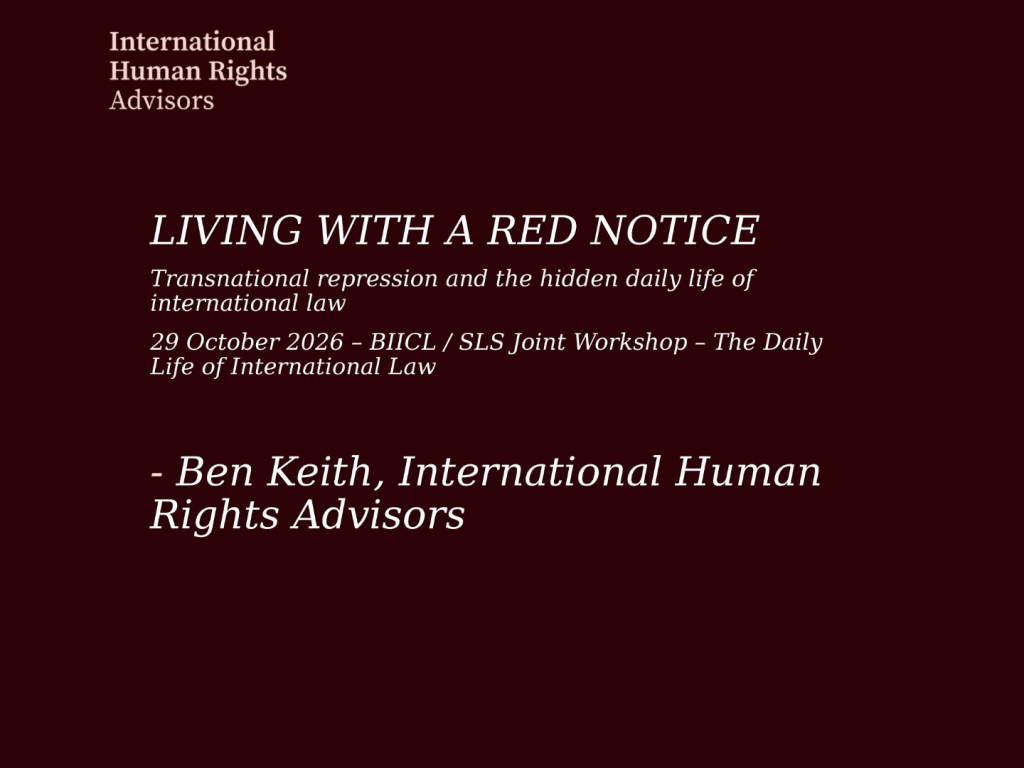
Ben Keith’s recent article in The Times was cited in the House of Lords on 9 November 2026. Lord Garnier KC used it when he asked the Government what it is doing to stop Russia abusing INTERPOL Red Notices and Diffusions. Lord Garnier is a former Solicitor General and declared his own interest as a practitioner in the field. He quoted Ben’s view that “Russia has been the worst offender for years”. The Home Office Minister, Lord Hanson of Flint, answered for the Government.
What was said in the House of Lords?
Lord Garnier asked what the UK was doing on its own and with other INTERPOL members. He then pressed the Minister to ensure that no Russian Red Notice or Diffusion is published unless it has first been examined in detail.
Lord Hanson said the Government takes misuse of INTERPOL’s systems “extremely seriously”. It will work with the National Crime Agency, INTERPOL’s Notices and Diffusions Task Force and like-minded countries. He made four further points:
- The Task Force reviews every Red Notice request before publication.
- The UK takes part in INTERPOL’s governance committee for data processing.
- A UK candidate was standing for election to the Commission for the Control of INTERPOL’s Files (CCF).
- INTERPOL is responsible for its own governance, and the UK is one member among 196.
Lord Garnier called those answers “a little passive”. He asked the Minister to raise the issue with colleagues and move it “up a gear”.
Why Russian notices leave UK residents in limbo
Responding to the debate, Ben welcomed the attention and raised a point the exchange did not cover. Russia remains an INTERPOL member, and not every Russian Red Notice is abusive. The difficulty sits with people living in the UK who are the subject of Russian notices.
The UK, for very good reason, does not execute Russian Red Notices and does not cooperate with Russian extradition requests. Much of Europe takes the same approach. People in this position are safe in Britain, but they cannot travel. And because no extradition hearing ever happens, they never receive a judicial decision discharging them. That decision is often the most persuasive document in an application to the CCF.
Ben has also seen several cases in which the UK did not tell INTERPOL that it had received an extradition request or a Red Notice for the person concerned. Without that information, INTERPOL has not removed certain Russian notices. Clients facing political or corporate-raiding cases have been left in limbo.
The Minister’s answers focused on the checks made before a notice is published. For clients in London, the gap comes later. It lies in notices the UK will never act on, but which nobody has asked INTERPOL to delete.
How IHR Advisors can help
We act for people subject to Russian Red Notices and Diffusions, including many based in the UK. Our work includes:
- applications to the CCF for deletion;
- gathering evidence of political motivation and corporate raiding to stand in for the missing court judgment;
- asking INTERPOL to restrict access to a notice while a complaint is decided;
- advising clients on the risk in specific countries before they travel.
Through our international law practice we also raise transnational repression with the UN and with Parliament.
Our thanks to Lord Garnier for raising the issue. The full exchange is in Hansard, and Ben’s Times article on Russia’s abuse of INTERPOL is on this site.
If you are in the UK and believe you are the subject of a Russian Red Notice or Diffusion, contact us in confidence.