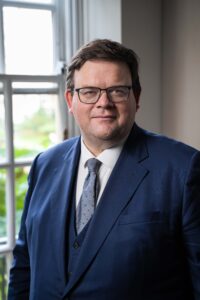
Ben Keith in the Kyiv Independent on Ukraine’s Energy Sector and Investor Legal Risk
Ben Keith wrote an op-ed in the Kyiv Independent arguing that Ukraine’s energy sector is open to foreign capital, provided investors treat the country’s legal risk as seriously as the physical risk from Russian strikes.
Writing after he spoke at London International Disputes Week in June 2026, he set out where the opportunity sits, where the danger sits, and how international law shapes both.
Ukraine’s energy sector is open for investment, and the decisive variable for most investors is legal risk rather than the physical risk of attack. That is the core of his analysis. Ukraine’s National Recovery Plan puts rebuilding costs at around $750 billion, with $130 billion earmarked for energy independence and green energy. Yet energy sector mergers and acquisitions came to just $23 million in 2025. The gap between the need and the actual flow of capital is the whole story.
Russian attacks on the grid have, against expectation, sped up the shift towards renewables, battery storage, biogas and distributed generation. Ukraine holds substantial bioenergy potential and could supply clean power to the rest of Europe at scale. The commercial logic is strong. The question is what stops the money arriving.
The legal risk investors face
Two risks deter investors. The first is physical: missiles and drones against energy infrastructure. The second is legal and is the one Ben Keith treats as more manageable and decisive. Martial law and the state’s asset seizure powers create uncertainty that a careful investor can price and protect against, but only if the structuring is right from the outset.
The precedents are concrete. In November 2022, Ukraine seized shares in five strategic companies, among them Ukrnafta and Ukrtatnafta, using wartime powers. That history sits behind every investment decision. At the same time, international arbitration offers a route to enforce rights. Naftogaz won a $5 billion award against Russia at The Hague over the seizure of its Crimean assets, a reminder that treaty protection and arbitral tribunals can deliver real recovery. Getting the legal architecture right, from investment treaty coverage to dispute resolution clauses, is what separates a priced risk from an unhedged one.
How IHR Advisors can help
Ben Keith practises in international law, sanctions and cross-border disputes, and speaks regularly on investment risk in conflict-affected states.
Investment in Ukraine will not wait for the war to end. The capital that moves first and structures its protection carefully is the capital that will shape the country’s recovery.
With thanks to the Kyiv Independent, where Ben Keith’s article appears in full here.
If you are weighing an investment or a dispute connected to Ukraine or another sanctioned or conflict-affected market, contact us for a confidential discussion.