The government seeks closer co-operation with abusive regimes when it suits it, Ben Keith and Rhys Davies write

Ben Keith and Rhys Davies comment in The Times on 23 November 2023

The UK sanctions regime is not working because there is no clear policy on which human rights abusers to put on the list. On international women’s day this month, the foreign secretary, James Cleverly, announced sanctions against four human rights abusers for gender-based violence in Iran, Syria, South Sudan and the Central African Republic.

Undeniably these individuals deserve to be sanctioned. What is less obvious is how a UK travel ban and asset freeze on those with little if any ties to the UK will prevent further human rights abuses.

Magnitsky sanctions are intended to apply pressure on regimes to stamp out corruption and human rights abuses while maintaining diplomatic channels of communication by targeting individuals. Without a coherent policy, Cleverly’s announcement is little more than a PR stunt.

The UK sanction regime needs to get a grip. It is currently patchy, with the government maintaining strong ties with some human rights abusers while being seen to stand up only to those who have no bearing on our economy. It seems the UK cannot afford to stand up to human rights abusers with attractive investment portfolios.

For instance, the United Arab Emirates has notably failed to align itself with its western allies on the Russian invasion of Ukraine. The UAE is the destination of choice for sanctioned supporters of Putin. Countries attempting to starve Russia of military components are concerned that the UAE has massively increased its exports of drones and microchips to Russia and have requested transparency of what exactly the UAE are exporting.

But there has been no hint of the UK stepping up to sanction UAE human rights abusers or those assisting Russians evade sanctions.

Sanctioning Russia and Belarus is important to starve the aggressors of finance and supplies, but outside that sphere the UK is too afraid to stand up for human rights where it might clash with domestic interests. With UAE, China and Saudi Arabia, the UK’s sanctions regime has no proper focus because the government is concerned about offending trading partners who routinely use torture and arbitrary detention.

Then there is Rwanda. For current political reasons over migration, ministers are obsessed with promoting Rwanda’s human rights record, which in reality is poor. The extraterritorial rendition of Paul Rusesabagina, a human rights activist, in 2020 was last year confirmed as a state abduction by the UN working group on arbitrary detention. Last week, there were hints that he might be released.

That egregious action should have resulted in Magnitsky sanctions. Instead, the UK seeks closer co-operation with proven human rights abusers. The government’s wilful lack of a coherent sanctions regime is clear and the repercussions are horrendous.

This article was first published in The Times on 23 March 2023, you can view the original article here.

Contact details

If you would like to speak with us about our areas of practice or anything else please contact us via the form linked below.

Contact Us

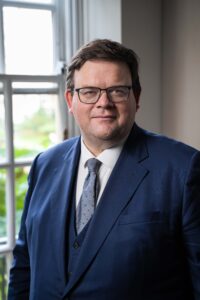
About the Authors

Ben Keith Barrister

Ben Keith is a co-founder of IHR Advisors and an internationally recognised lawyer specialising in INTERPOL Red Notice challenges, extradition, international human rights law and asylum. He is the co-author of Interpol, Law and Practice (Sweet & Maxwell, 2026). He is co-editor of Red Notice Monitor, the leading public resource on INTERPOL Red Notice abuse and the practice of INTERPOL’s Commission for the Control of Files.

Ben represents clients across every region in INTERPOL Red Notice and Diffusion challenges before the Commission for the Control of Files. He has secured the deletion of Notices issued by states including Russia, China, the United Arab Emirates, Turkey, Belarus, Iran and Venezuela, in cases involving journalists, opposition political figures, refugees, human rights defenders and business figures targeted in commercial and political disputes. He is the author of the INTERPOL chapter in The Practitioner’s Guide to Global Investigations (Global Investigations Review, 2026).

Ben has appeared as counsel before the European Court of Human Rights Grand Chamber, the UK Supreme Court, the African Commission on Human and Peoples’ Rights, the Inter-American Commission on Human Rights, the UN Working Group on Arbitrary Detention, and the UN Committee Against Torture. He is a member of the List of Counsel for the International Criminal Court and the Kosovo Specialist Chambers in The Hague.

He regularly acts for politically exposed persons, journalists, human rights defenders and high net worth individuals facing extradition, INTERPOL Notices and other instruments of transnational repression. He provides legal commentary to national and international media including the Guardian, The Times, the Financial Times, The Telegraph, the BBC, Sky News, CNN, CBS 60 Minutes, The Economist, Politico and Al Jazeera.

Ben is ranked Star Individual in Chambers and Partners and a leading individual in The Legal 500 for extradition. He practises from 5 St Andrew’s Hill in London.

View Ben Keith's profile
Rhys Davies Barrister

Rhys Davies is a co-founder of IHR Advisors and an internationally recognised lawyer specialising in INTERPOL Red Notice challenges, international criminal law and international human rights law. He is the co-author of Interpol, Law and Practice (Sweet & Maxwell, 2026). He is co-editor of Red Notice Monitor, the leading public resource on INTERPOL Red Notice abuse and the practice of INTERPOL’s Commission for the Control of Files.

Rhys co-authored the report Undue Influence: the UAE and INTERPOL with Sir David Calvert-Smith, examining the systemic misuse of INTERPOL’s Notice and Diffusion systems by the United Arab Emirates and the implications for INTERPOL’s governance. He represents clients in INTERPOL Red Notice challenges before the Commission for the Control of Files, with particular focus on cases involving Middle Eastern and Central Asian states, and on the position of refugees, journalists and political dissidents targeted through INTERPOL by their states of origin.

Rhys has significant experience of in-country legal advice and assistance, most recently in the West Bank, and a specific interest in the Middle East. He is a member of the List of Counsel for the International Criminal Court, the Kosovo Specialist Chambers, and the Special Tribunal for Lebanon. He regularly speaks at, and chairs, events at the United Nations Human Rights Council in Geneva and at the House of Commons on matters of international law.

Rhys is the author of numerous articles on INTERPOL Red Notice practice and on justice in the Middle East, and is in demand as a commentator on international human rights. He provides legal commentary to national and international media including The Times, the Guardian, the Independent, the Financial Times, CBS 60 Minutes, Sky News, City AM and Al Jazeera.

Rhys is recommended as a leading individual in The Legal 500. He practises from Temple Garden Chambers in London and The Hague.

View Rhys Davies's profile

Categories