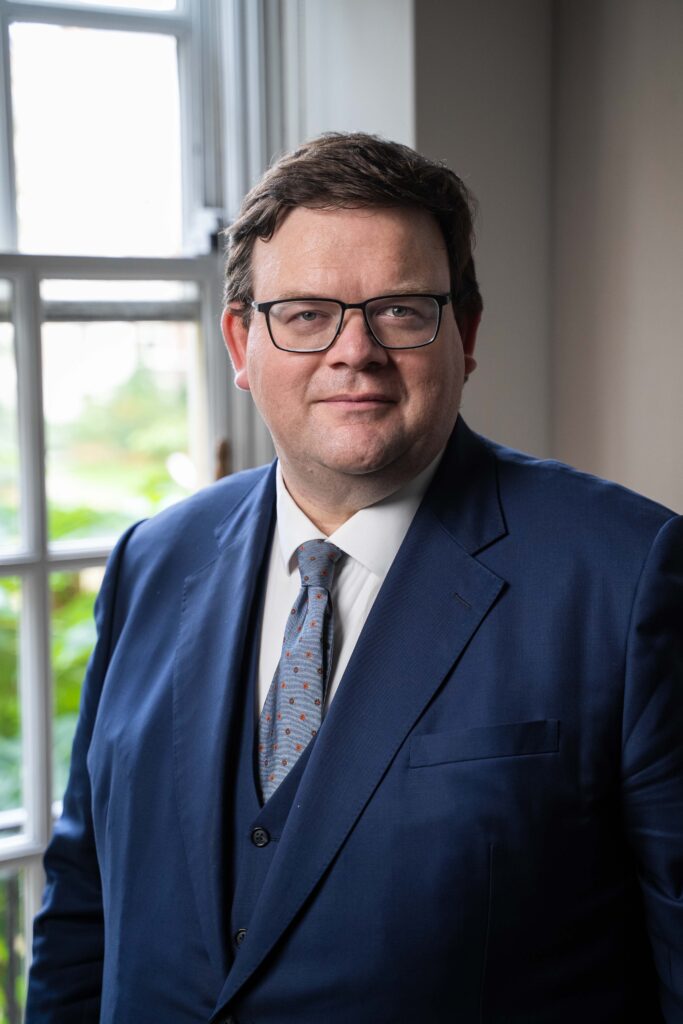
Ben Keith comments in The Times on 19 October 2023

The UK prison system is broken. The government has trawled through history to look for a solution and has settled on the 18th century to tackle a 21st-century problem.

Its announced solution to prison overcrowding is transportation. Not sending convicts to Australia, as our ancestors did, but renting prison space from countries such as Estonia.

The UK has been criticised for several years for the dismal state of its prisons. Jails are falling into disrepair, are severely overcrowded, dilapidated and security personnel are under-resourced, leading to violence among inmates. A recent inquest report even found that “prison inmates [are] at risk of death owing to healthcare failings.”

The failure of extraditions owing to inhumane conditions of detention in the destination country is a regular issue — courts have been dealing with inadequate European prison conditions for years. But now the UK has joined the list of dire prison estates and is becoming a laughing stock.

Germany recently refused the extradition of an Albanian man to the UK despite alleged drug trafficking and money laundering crimes because of chronic overcrowding and violence in British institutions. Since the UK left the EU, it can no longer rely on the European arrest warrant and, as a third country, ought to provide assurances about prison conditions, but was unable in this particular example to do so. Instead, it informed the German court of plans to build prison spaces to tackle overcrowding at an unnamed date in the future.

In July, an Irish court refused extradition on the grounds that prison overcrowding would result in the requested person being locked up for 22 hours a day. The problem is not new — in 2019 a Dutch court refused extradition after prison inspectors described “some of the most disturbing conditions… ever seen”, which, they said, had “no place in an advanced nation in the 21st century”. But the warnings were not heeded.

The recent prison escape scandal has brought the crisis to light. Daniel Khalife, on remand at HMP Wandsworth, one of the UK’s largest prisons, managed a spectacular escape, while strapped under a delivery truck.

The response from Alex Chalk KC, the justice secretary, was to state that that such incidents “are very rare” and investment into the prison system is “the largest since the Victorian era”. His responses are not exactly reassuring.

Khalife’s escape speaks volumes about the poor state of UK prisons. While the Ministry of Justice has admitted that Wandsworth prison was 40 per cent understaffed on the day of the escape, the underlying problem of the prison crisis is chronic underfunding, no long-term plan and lack of care.

Until the prison estate and sentencing policy are significantly overhauled, terrible conditions that lead to risks to prisoners and society as a whole will continue.


Contact details

If you would like to speak with us about our areas of practice or anything else please contact us via the form linked below.

Contact Us

About the Authors

Ben Keith Barrister

Ben Keith is a co-founder of IHR Advisors and an internationally recognised lawyer specialising in INTERPOL Red Notice challenges, extradition, international human rights law and asylum. He is the co-author of Interpol, Law and Practice (Sweet & Maxwell, 2026). He is co-editor of Red Notice Monitor, the leading public resource on INTERPOL Red Notice abuse and the practice of INTERPOL’s Commission for the Control of Files.

Ben represents clients across every region in INTERPOL Red Notice and Diffusion challenges before the Commission for the Control of Files. He has secured the deletion of Notices issued by states including Russia, China, the United Arab Emirates, Turkey, Belarus, Iran and Venezuela, in cases involving journalists, opposition political figures, refugees, human rights defenders and business figures targeted in commercial and political disputes. He is the author of the INTERPOL chapter in The Practitioner’s Guide to Global Investigations (Global Investigations Review, 2026).

Ben has appeared as counsel before the European Court of Human Rights Grand Chamber, the UK Supreme Court, the African Commission on Human and Peoples’ Rights, the Inter-American Commission on Human Rights, the UN Working Group on Arbitrary Detention, and the UN Committee Against Torture. He is a member of the List of Counsel for the International Criminal Court and the Kosovo Specialist Chambers in The Hague.

He regularly acts for politically exposed persons, journalists, human rights defenders and high net worth individuals facing extradition, INTERPOL Notices and other instruments of transnational repression. He provides legal commentary to national and international media including the Guardian, The Times, the Financial Times, The Telegraph, the BBC, Sky News, CNN, CBS 60 Minutes, The Economist, Politico and Al Jazeera.

Ben is ranked Star Individual in Chambers and Partners and a leading individual in The Legal 500 for extradition. He practises from 5 St Andrew’s Hill in London.

View Ben Keith's profile
Rhys Davies Barrister

Rhys Davies is a co-founder of IHR Advisors and an internationally recognised lawyer specialising in INTERPOL Red Notice challenges, international criminal law and international human rights law. He is the co-author of Interpol, Law and Practice (Sweet & Maxwell, 2026). He is co-editor of Red Notice Monitor, the leading public resource on INTERPOL Red Notice abuse and the practice of INTERPOL’s Commission for the Control of Files.

Rhys co-authored the report Undue Influence: the UAE and INTERPOL with Sir David Calvert-Smith, examining the systemic misuse of INTERPOL’s Notice and Diffusion systems by the United Arab Emirates and the implications for INTERPOL’s governance. He represents clients in INTERPOL Red Notice challenges before the Commission for the Control of Files, with particular focus on cases involving Middle Eastern and Central Asian states, and on the position of refugees, journalists and political dissidents targeted through INTERPOL by their states of origin.

Rhys has significant experience of in-country legal advice and assistance, most recently in the West Bank, and a specific interest in the Middle East. He is a member of the List of Counsel for the International Criminal Court, the Kosovo Specialist Chambers, and the Special Tribunal for Lebanon. He regularly speaks at, and chairs, events at the United Nations Human Rights Council in Geneva and at the House of Commons on matters of international law.

Rhys is the author of numerous articles on INTERPOL Red Notice practice and on justice in the Middle East, and is in demand as a commentator on international human rights. He provides legal commentary to national and international media including The Times, the Guardian, the Independent, the Financial Times, CBS 60 Minutes, Sky News, City AM and Al Jazeera.

Rhys is recommended as a leading individual in The Legal 500. He practises from Temple Garden Chambers in London and The Hague.

View Rhys Davies's profile