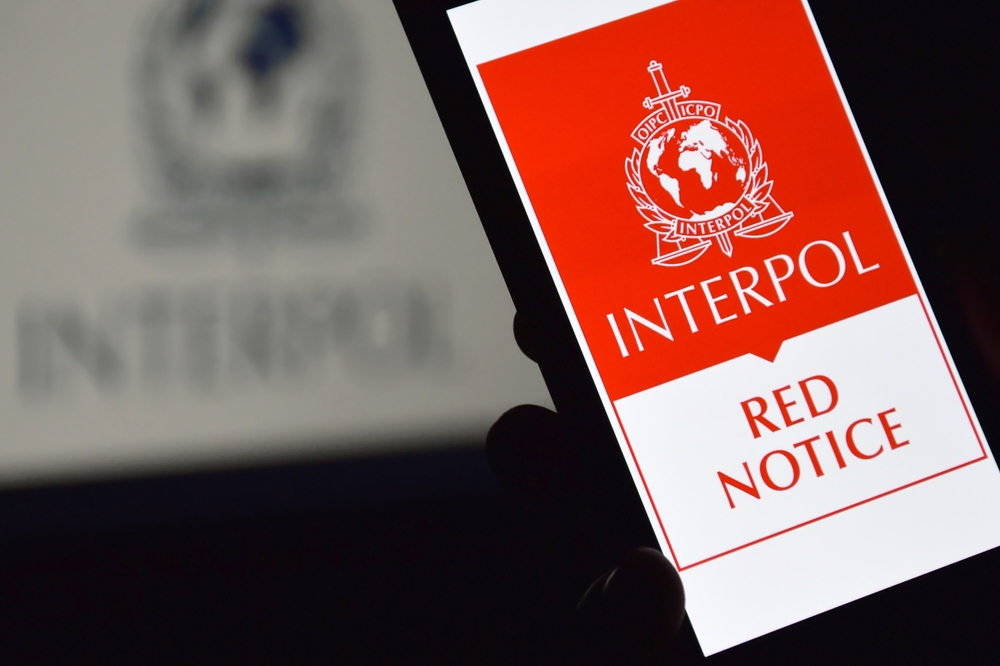
The Kremlin is weaponising red notices to silence its enemies – and Interpol is tolerating it
Last week, we gave evidence to Parliament’s Joint Committee on Human Rights about how Russia and other authoritarian states weaponise Interpol against political opponents. While the world focuses on the illegal invasion of Ukraine, Russia continues to wage a silent war of transnational repression against its critics, using Interpol’s Red Notice system as its weapon of choice.
When Interpol was founded, it had a noble aim: to facilitate international police cooperation. But it now faces a crisis of legitimacy. By attempting to remain neutral between democracies and dictatorships, Interpol has become an unwitting accomplice to transnational repression.
We told the Committee that Russia has historically been the most prolific abuser of Interpol’s systems. Up to 38 per cent of all red notices issued in 2021 – requests to locate and provisionally arrest individuals pending extradition – have come from Russia. Red notices have been described as the sniper’s rifle of autocrats – long-distance, targeted and devastatingly effective.
How do Interpol red notices work?
The problem is structural. Red notices require minimal evidence and scrutiny before being approved. When individuals challenge these notices, they face a difficult process. The Commission for the Control of Interpol’s Files (CCF), responsible for reviewing challenges, consists of just five lawyers who must process an overwhelming caseload.
A red notice isn’t merely an administrative inconvenience. It can destroy lives. Individuals with red notices find themselves unable to travel, access banking services or secure visas. They live in constant fear of detention at borders. If detained, they may face extradition proceedings to countries where torture and unfair trials are commonplace.
Human rights defenders are particularly vulnerable to transnational repression facilitated by Interpol. We’ve seen numerous cases of activists, NGO workers and dissidents targeted simply for advocating for democratic values or exposing corruption. Recently, we’ve observed Russia threatening journalists over their reporting on the invasion of Ukraine, using legal mechanisms including Interpol to silence critical voices. These actions strike a devastating blow against freedom of speech and cast further shadows over Russia’s already troubling human rights record.
For asylum seekers and migrants, a red notice can be particularly devastating. We told the Committee there’s poor understanding about what red notices actually are – officials often assume that anyone with a red notice must be a legitimate criminal. This creates a cruel catch-22: you need asylum to be protected from politically motivated red notices, but the existence of a red notice can block your asylum claim.
When Russia targets political opponents, it rarely uses explicitly political charges. Instead, it cloaks its persecution in allegations of fraud, corruption or other ordinary crimes. We’ve even seen politically motivated and fabricated murder cases.
We need to recognise that Interpol’s notion of neutrality is fundamentally flawed. True neutrality would mean enforcing rules equally against all member states, not turning a blind eye to systematic abuse. When the police are the criminals, there is a trade-off between cooperation and neutrality.
How can Interpol crack down on Russia?
The solutions are not complex, just politically difficult. Interpol needs greater transparency. It should publish statistics on which countries issue red notices and what percentage are later found invalid. It should establish a tiered system of scrutiny, with countries having a history of abuse facing enhanced checks.
Interpol also needs proper funding for its review mechanisms. Chronically understaffed, the CCF cannot possibly provide adequate oversight. Democratic nations, which provide the bulk of Interpol’s statutory funding, should demand reform as a condition of their continued financial support.
The UK government could also do more at home. Parliament should consider legislation similar to the US TRAP Act (Transnational Repression Accountability and Prevention), requiring reporting on Interpol abuse. The government should establish a mechanism for UK nationals to discreetly confirm whether they are subject to red notices, particularly those at risk of transnational repression.
When questioned by the Committee, we were forced to speculate on many aspects of Interpol’s operations due to its notorious opacity. This lack of transparency serves the interests of authoritarian regimes, not justice or security.
The problem is bigger than Russia
Russia’s abuse of Interpol doesn’t exist in isolation. We see similar patterns with China, Turkey, the UAE and others. But Russia has been particularly brazen. Even after being placed under “corrective measures” in 2022, we continue to see problematic Russian red notices passing through the system with minimal scrutiny.
In our legal practice, we have seen recent instances of Interpol allowing Russian red notices to be issued and acted upon, even after Russia’s invasion of Ukraine and supposed corrective measures. These cases demonstrate a fundamental failure by Interpol to acknowledge the systemic human rights violations and rule of law deficiencies in Russia. The problem is not just a few bad apples but a justice system fundamentally corrupted by political interference, torture and the absence of fair trial rights.
Interpol has suspended only one country in its history – Syria – and it took nine years of civil war and documented atrocities to reach that point. Meanwhile, Russia continues to use Interpol as a tool of state policy despite its illegal invasion of a sovereign nation and documented war crimes.
The international legal order depends on trust and good faith. When autocracies like Russia systematically abuse international organisations for political ends, the response cannot be business as usual. Interpol must reform or risk becoming irrelevant – or worse, an active enabler of transnational repression.
The UK, with its proud tradition of rule of law and human rights, should be at the forefront of demanding this change. Our parliament has taken an important first step by examining these issues. Now it’s time for the government to act.