International Human Rights Advisors in Forbes on 30 March 2023

Lawyers acting for a Ukrainian citizen have called on the U.S. government to open an investigation into a senior member of the Abu Dhabi ruling family over claims that he may have assisted Russians in evading U.S. sanctions.

The request has been made to the Department of State and the Department of the Treasury and the latter’s Office of Foreign Assets Control (OFAC) and concerns Sheikh Mansour bin Zayed Al-Nahyan, deputy prime minister of the United Arab Emirates (UAE).

Sheikh Mansour is a prominent figure in the UAE and beyond. He is a brother to UAE president Sheikh Mohammed bin Zayed Al-Nahyan and is married to a daughter of Dubai’s ruler Sheikh Mohammed bin Rashid Al-Maktoum. He is also the figurehead for Abu Dhabi’s ownership of Manchester City football club and was recently appointed as chairman of the Mubadala Investment Company, a $285 billion sovereign wealth fund.

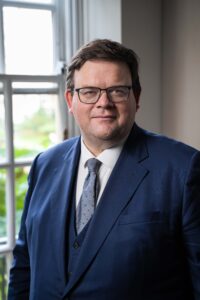
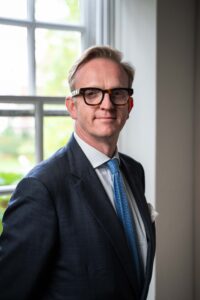
The request for the U.S. to investigate him has been made by British barristers Rhys Davies and Ben Keith on behalf of a Ukrainian human rights activist, whose name has been withheld due to safety concerns.

“There can be little doubt that the UAE is now the destination of choice for sanctioned Russians from around the world to hide their assets,” said Davies. “It is clear that a number of ultra-high net worth and high-profile Russian oligarchs who have been sanctioned by the United States (and other jurisdictions) transferred highly visible assets to the UAE after being sanctioned. We are asking the US government to investigate the matter urgently.”

According to a spokesperson acting for the lawyers, their request “sets out widely documented evidence indicating the apparent facilitation by Sheikh Mansour specifically – and the UAE in general – of the transfer of assets by Russian oligarchs to the UAE.”

Official concern

It follows signs that officials in Washington D.C. are concerned about the UAE’s record in dealing with Russia in the wake of its invasion of Ukraine in February 2022.

Earlier this year, the Treasury Department’s undersecretary for terrorism and financial intelligence Brian Nelson visited the UAE and held talks with a wide range of officials. According to the official readout of the trip, Nelson “shared Treasury’s focus on rooting out evasion of U.S. sanctions, particularly on Russia and Iran, and its commitment to take additional actions against those evading or facilitating the evasion of sanctions”.

Since then, other U.S. officials have visited the Gulf country, including James O’Brien, who heads up the Office of Sanctions Coordination at the State Department.

The request made to the State Department and Treasury Department points to the “significant wealth controlled by Russian oligarchs sympathetic to President [Vladmir] Putin … transferred to the UAE immediately following the invasion of Ukraine in February 2022.” It also includes the names of some of the oligarchs who have transferred assets to the UAE since being targeted by international sanctions, including steelmaking billionaire and member of the Russian parliament (Duma) Andrei Skoch.

The two British lawyers say that, if Sheikh Mansour is found to be helping individuals to evade sanctions, he could also be targeted by the U.S. sanctions program.

The lawyers made a similar request to the UK government in October 2022, in regard to Sheikh Mansour’s alleged involvement in helping Russians bypass British sanctions. To date, the UK authorities have not responded publicly to the request.

This article first appeared in Forbes and can be read in full, here.

Contact details

If you would like to speak with us about our areas of practice or anything else please contact us via the form linked below.

Contact Us

About the Authors

Ben Keith Barrister

Ben Keith is a co-founder of IHR Advisors and an internationally recognised lawyer specialising in INTERPOL Red Notice challenges, extradition, international human rights law and asylum. He is the co-author of Interpol, Law and Practice (Sweet & Maxwell, 2026). He is co-editor of Red Notice Monitor, the leading public resource on INTERPOL Red Notice abuse and the practice of INTERPOL’s Commission for the Control of Files.

Ben represents clients across every region in INTERPOL Red Notice and Diffusion challenges before the Commission for the Control of Files. He has secured the deletion of Notices issued by states including Russia, China, the United Arab Emirates, Turkey, Belarus, Iran and Venezuela, in cases involving journalists, opposition political figures, refugees, human rights defenders and business figures targeted in commercial and political disputes. He is the author of the INTERPOL chapter in The Practitioner’s Guide to Global Investigations (Global Investigations Review, 2026).

Ben has appeared as counsel before the European Court of Human Rights Grand Chamber, the UK Supreme Court, the African Commission on Human and Peoples’ Rights, the Inter-American Commission on Human Rights, the UN Working Group on Arbitrary Detention, and the UN Committee Against Torture. He is a member of the List of Counsel for the International Criminal Court and the Kosovo Specialist Chambers in The Hague.

He regularly acts for politically exposed persons, journalists, human rights defenders and high net worth individuals facing extradition, INTERPOL Notices and other instruments of transnational repression. He provides legal commentary to national and international media including the Guardian, The Times, the Financial Times, The Telegraph, the BBC, Sky News, CNN, CBS 60 Minutes, The Economist, Politico and Al Jazeera.

Ben is ranked Star Individual in Chambers and Partners and a leading individual in The Legal 500 for extradition. He practises from 5 St Andrew’s Hill in London.

View Ben Keith's profile
Rhys Davies Barrister

Rhys Davies is a co-founder of IHR Advisors and an internationally recognised lawyer specialising in INTERPOL Red Notice challenges, international criminal law and international human rights law. He is the co-author of Interpol, Law and Practice (Sweet & Maxwell, 2026). He is co-editor of Red Notice Monitor, the leading public resource on INTERPOL Red Notice abuse and the practice of INTERPOL’s Commission for the Control of Files.

Rhys co-authored the report Undue Influence: the UAE and INTERPOL with Sir David Calvert-Smith, examining the systemic misuse of INTERPOL’s Notice and Diffusion systems by the United Arab Emirates and the implications for INTERPOL’s governance. He represents clients in INTERPOL Red Notice challenges before the Commission for the Control of Files, with particular focus on cases involving Middle Eastern and Central Asian states, and on the position of refugees, journalists and political dissidents targeted through INTERPOL by their states of origin.

Rhys has significant experience of in-country legal advice and assistance, most recently in the West Bank, and a specific interest in the Middle East. He is a member of the List of Counsel for the International Criminal Court, the Kosovo Specialist Chambers, and the Special Tribunal for Lebanon. He regularly speaks at, and chairs, events at the United Nations Human Rights Council in Geneva and at the House of Commons on matters of international law.

Rhys is the author of numerous articles on INTERPOL Red Notice practice and on justice in the Middle East, and is in demand as a commentator on international human rights. He provides legal commentary to national and international media including The Times, the Guardian, the Independent, the Financial Times, CBS 60 Minutes, Sky News, City AM and Al Jazeera.

Rhys is recommended as a leading individual in The Legal 500. He practises from Temple Garden Chambers in London and The Hague.

View Rhys Davies's profile

Categories