This week I spoke to the Guardian for its investigation into the targeting of dissidents on British soil. Russia, China, India, Saudi Arabia and Iran have all been accused of pursuing their critics here — through surveillance, intimidation and, in some cases, violent attack. MI5 state-threat investigations rose by 48% in a single year. The UK, long thought a hard place for hostile states to operate, has become a hunting ground for authoritarian regimes.
I put it plainly to the Guardian: the UK government is not prepared to stand up to anybody. But the deeper lesson of the investigation lies in how the people targeted are left to cope. Those interviewed described sparse responses from the authorities and safety advice — install CCTV, change your car, avoid going out alone — that loads the work of protection onto the victim. The state names the threat, then steps back and leaves the individual to manage it.
That is the heart of the problem. Successive governments have leaned on diplomacy that does nothing to stop the attacks. The 2023 National Security Act created new offences, but legislation without enforcement is a gesture, not a strategy. There is no clear plan, no reliable data, and no consistent answer for those living in fear. For anyone in a hostile state’s sights, waiting for the government to act is not a strategy. It is a gamble with the odds against you.
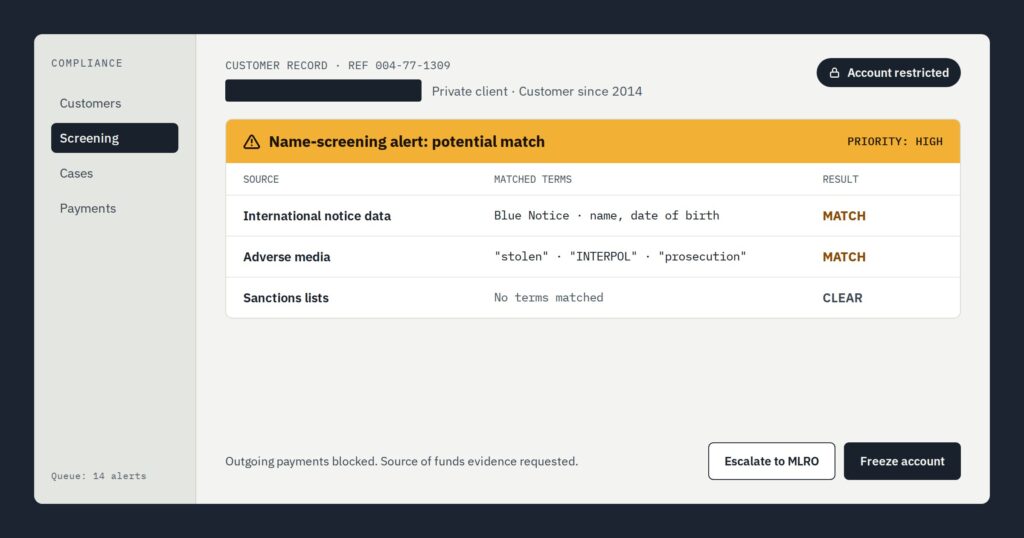
The Guardian focuses on the violent end of the spectrum — the stabbings, the surveillance. It does not mention Interpol Red Notices, but these are another technique in the same toolkit, and a quieter one. A fabricated notice freezes bank accounts, triggers arrests at borders, and turns the machinery of international policing against the people it should protect. We see regimes use it every week.
And the reach extends beyond journalists and activists. The entrepreneur who fell out with a president, the principal whose wealth a regime wants, the executive pursued for who they know — all face the same tools. For someone with a profile and a fortune, the threat is concrete: a frozen account, a refused border, a name that no longer clears compliance.
The answer is not to wait, but to prepare. Rhys Davies and I have spent years defending people in exactly this position. We challenge abusive Red Notices, fight extradition, contest sanctions listings, and map a client’s exposure before it hardens into a crisis. Where you travel, bank and reside is now a legal question. For anyone who believes a hostile state may have them in its sights, robust legal advice taken early is the difference between managing a threat and reacting to one.