What risks do lawyers face in restrictive environments?
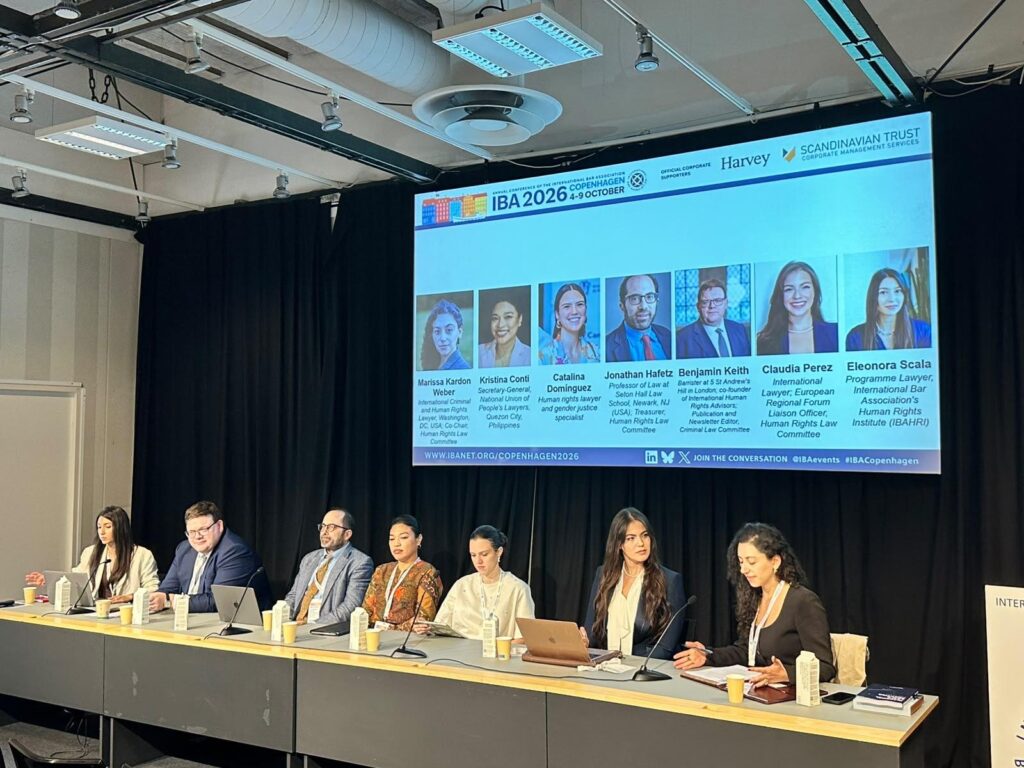
A restrictive environment is one where the state uses its power against the lawyers who challenge it, through prosecution, disbarment, surveillance or violence. Kristina Conti described what that means in the Philippines. Her colleagues at the National Union of Peoples’ Lawyers face what they call THI: threats, harassment and intimidation. Two NUPL lawyers face cyber libel charges brought by a mining company. Another was charged with kidnapping after returning a child witness to the child’s mother. A judge and an NUPL member face terrorism financing charges over NGO work from a decade ago. Lawyers who are killed, she said, tend to be shot near their homes or offices, often by two men on a motorcycle, because the killing is meant to send a message.
Catalina Dominguez Fernandez, a Colombian lawyer based in Kenya, described a feminist organisation in Argentina that closed under government pressure after its lawyers had to relocate. She also described threats in Kenya that now stop her travelling to the communities she supports. Jonathan Hafetz set out the US position. Lawyers there are not being jailed. But the administration has targeted law firms over the clients they took on, moved detained students across the country away from their lawyers, cut funding for representation of unaccompanied children, and pressed government lawyers to put politics before professional judgement.
How does Ben Keith work for clients he cannot reach?
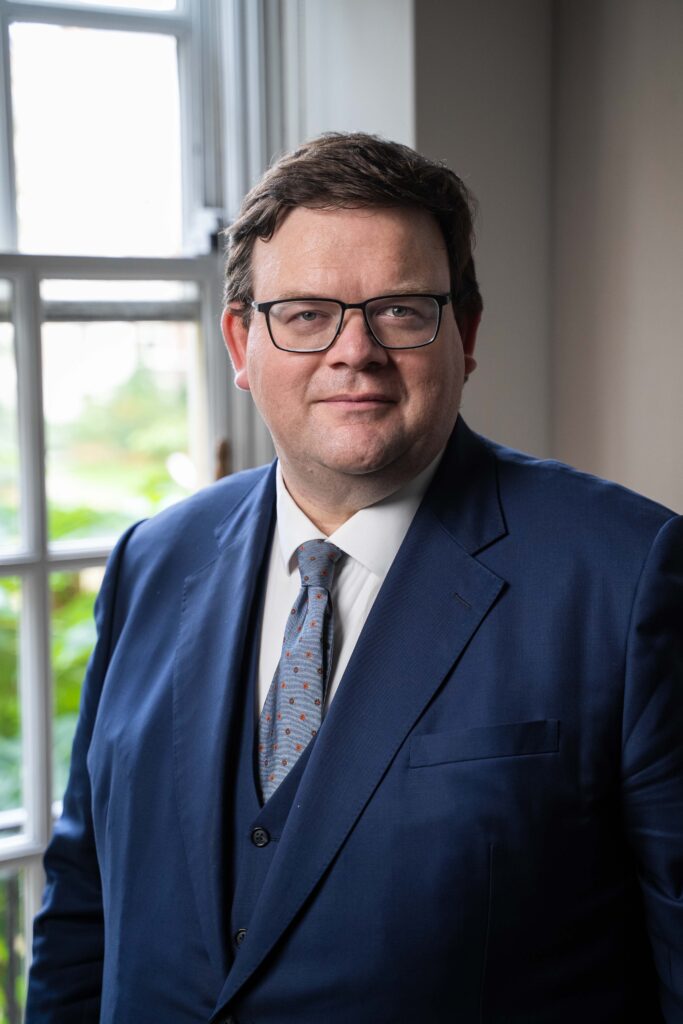
Ben began by acknowledging his own position. He is a UK barrister working from London. He can make applications to the UN and to INTERPOL and speak to Western media without personal risk. He said he is neither brave enough nor experienced enough to work inside many of the countries his clients come from. Most of his work is done from outside, alongside lawyers, human rights defenders and journalists who are in the country or in exile. They come to him because the courts at home are captured or closed to them.
That changes what a legal win is for. In last-resort cases before the UN or the Commission for the Control of INTERPOL’s Files, Ben said, a decision is only the start. It is the hook. It gives politicians, diplomats and civil society material they can act on.
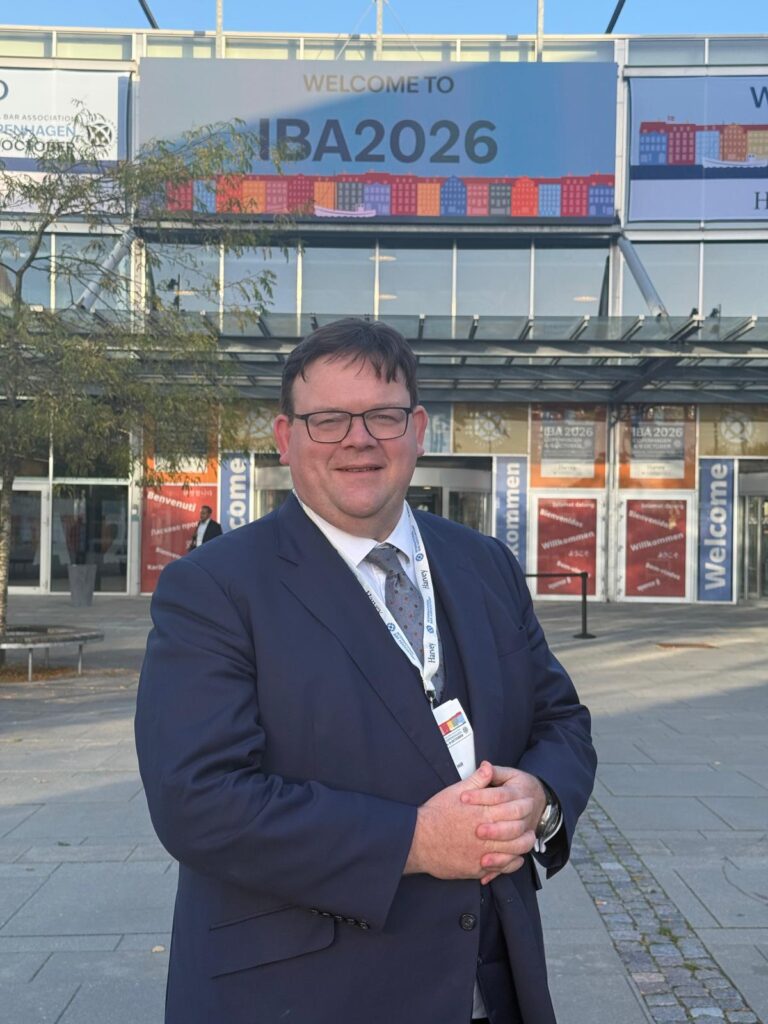
The conference itself showed him the limits. Many of the lawyers from restrictive environments he met in Copenhagen could not safely work with him. In Turkey, lawyers who take political cases against the state risk prison or disbarment. Kazakhstan and Azerbaijan are known for disbarring lawyers who argue against the state. In China, and now in Hong Kong, a lawyer can be put at real risk simply by speaking to him on the phone. His role, he said, is often to find these lawyers some form of international protection. That protection frequently comes faster through the media than through the law, because legal applications take years and a story can be published the same day.
When does the media protect a client?
Ben returned to a case he had described earlier in the week. A woman wanted by Bahrain was detained in Oman after giving birth. There was no domestic process that could help her. With an NGO and several journalists, Ben took the case public. The Omani authorities were furious and demanded that the coverage stop. They backed off as the pressure continued, through UN Special Rapporteurs and then diplomatic missions. She has since left Oman with her children. Oman, he noted, wants to be seen as a tourist destination.
The UAE is different. Ben has succeeded at the UN in showing that the UAE has no effective rule of law in political cases. The UK, the US and the EU have all made statements. His clients have not been released.
Marissa Weber asked how he decides whether to go public. Ben described it as a risk analysis. Will publicity put the client in more danger? If the client has escaped, will family, friends or colleagues still in the country pay for it? He described a client whose company had been seized by a state and whose executives had been tortured in secret detention. The evidence was strong. The client decided not to publish, because the people still in the country would be at risk again.
The answer often turns on profile. A dissident with a public voice is harder to attack. Lawyers, Ben said, rarely have that kind of profile, which is why they are so often the ones targeted.
Does public pressure still work?
The panel did not entirely agree. Jonathan Hafetz said that after September 11, exposing the gap between a government’s stated values and its conduct put real pressure on Washington. When a Defense Department official urged companies to boycott firms representing Guantánamo detainees, the backlash was immediate. That pressure, he argued, has weakened in the United States. An administration that does not accept that it has anything to be ashamed of is hard to shame.
Claudia Perez offered a different route. A blocked court, she said, does not mean a blocked strategy. Diplomatic engagement, international attention and careful documentation can preserve evidence and create the conditions for accountability later, even when no court is available now.
How will attacks on lawyers be tracked?
Eleonora Scala announced the IBA Human Rights Institute’s Lawyers at Risk Monitor, due to launch in the first quarter of 2027. It will record verified attacks on lawyers worldwide where there is prima facie evidence that the attack is linked to their work. Individual cases will be kept confidential for safety, and aggregated findings will be published. The data will feed the UN Special Rapporteur on the independence of judges and lawyers and the monitoring body for the Council of Europe Convention for the Protection of the Profession of Lawyer.
Kristina Conti added that the NUPL’s own records, kept since the martial law era, are what allow victims’ families to answer attempts to rewrite that history. In questions, Ben linked the Monitor to transnational repression. He sits on two groups in the UK and Europe working on the targeting of exiled lawyers and defenders, which governments in Europe, the UK and Canada are now beginning to study.
What can lawyers elsewhere do?
Each panellist closed with one request. Ben asked lawyers to talk about these cases, in the media and in bar associations, so that the plight of particular lawyers is known and discussed. Catalina Dominguez Fernandez asked for support for independent media and for attention to countries that rarely make the news. Kristina Conti pointed to social media, urgent alerts and bar associations that offer sanctuary to threatened lawyers. Eleonora Scala suggested pro bono trial monitoring and mentoring for lawyers in exile.
A lawyer nobody has heard of is the easiest one to silence.
How IHR Advisors can help
We act for lawyers, human rights defenders and journalists who cannot obtain a remedy at home. We bring cases to UN Special Procedures and treaty bodies, challenge INTERPOL Red Notices and Diffusions, and work with NGOs, journalists and diplomatic contacts where the law alone will not secure a client’s release.
Our thanks to Marissa Weber for chairing, to Kristina Conti, Catalina Dominguez Fernandez, Jonathan Hafetz, Claudia Perez and Eleonora Scala, and to the IBA’s Human Rights Law, LGBTQI+ Law and War Crimes Committees. The session details are on the IBA website.
If you are a lawyer or defender facing reprisals for your work, contact us in confidence.