We use cookies where necessary to allow us to understand how people interact with our website and content, so that we can continue to improve our service.
We only ever receive anonymous information, and cannot track you across other websites.
Ben Keith in Newsweek: What Will the US Courts Do With Nicolás Maduro?
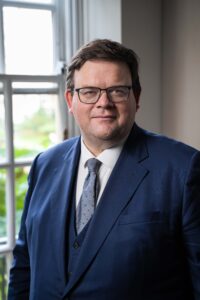
Ben Keith has published an op-ed in Newsweek on the prosecution of Nicolás Maduro in the Southern District of New York. The piece argues that the dramatic seizure of the former Venezuelan leader from Caracas is unlikely to derail the case, and that the most realistic outcome is a plea agreement rather than a jury verdict.
The case and what is alleged
Maduro and his wife, Cilia Flores, were brought before a federal judge in Manhattan on 5 January 2026 after a US raid on Caracas. Maduro declared himself a “kidnapped president” and a “prisoner of war” before the judge cut him short. He has since pleaded not guilty.
The indictment accuses Maduro and Flores of leading a narco-terrorism conspiracy spanning more than two decades. Prosecutors allege that the Venezuelan state was repurposed as a logistics platform for cocaine trafficking, partnering with groups designated by Washington as terrorist organisations while providing diplomatic cover, law-enforcement protection and passports to traffickers.
Why the most likely outcome is a plea
The charges are grave. They are also legally complex. Proving that a head of state personally directed or knowingly facilitated cartel operations is rarely straightforward. Large international narcotics cases tend to rely on sweeping allegations, while much of the underlying evidence remains classified. The familiar dynamic in cases of this shape is enormous exposure for the defendant set against real trial risk for the prosecution.
In Ben’s analysis, the most likely outcome is a plea. Intelligence-derived material, cooperating witnesses and sealed evidence may never be disclosed unless a defendant insists on going to trial. Faced with the prospect of life imprisonment, defendants often conclude that negotiating the terms of responsibility is less risky than contesting every allegation. The narrative weight against Maduro, built over years of indictments, sanctions and intelligence assessments, already puts prosecutors in a commanding position at the negotiating table.
Why immunity and the illegal-seizure defence will fail
Maduro’s lawyers argue that he enjoys head-of-state immunity and that his seizure was unlawful. Both claims may carry weight in international debate. Neither is likely to succeed in a New York courtroom.
Immunity in US law follows recognition, and Washington does not recognise Maduro as Venezuela’s legitimate president. American courts are reluctant to second-guess that political determination. Even where immunity is raised, courts have repeatedly accepted that it does not extend to allegations of narco-terrorism. Once judges focus on the nature of the alleged conduct rather than the office once held, immunity arguments tend to wither.
Nor will the manner of Maduro’s capture derail the case. In United States v. Alvarez-Machain, the Supreme Court held that even an unlawful abduction does not deprive a federal court of jurisdiction. Challenges based on illegal rendition almost never succeed unless accompanied by conduct so egregious that it shocks the conscience of the court.
Universal jurisdiction and the ICC
A US prosecution will not be the last legal contest. Argentina has asserted universal jurisdiction over alleged acts of torture and enforced disappearance committed under Maduro’s rule. The International Criminal Court continues to investigate crimes against humanity in Venezuela. Both may seek custody once US proceedings conclude.
Here too, the practical answer is less dramatic than the rhetoric. The United States will insist on completing its own prosecution first, and as a non-party to the Rome Statute, it has little incentive to prioritise The Hague. Extradition decisions will turn on sequencing, diplomacy and bargaining power rather than abstract principle. Custody will become a chip to be traded rather than a purely legal question.
Sovereignty protects until it does not. Once custody is secured, law follows power, not the other way around.
With thanks to Newsweek for publishing Ben’s piece. The full op-ed is available on the Newsweek site. For confidential advice on cross-border criminal exposure or extradition risk, please contact us.
Unsplash
Contact details
If you would like to speak with us about our areas of practice or anything else please contact us via the form linked below.
Ben Keith is a co-founder of IHR Advisors and an internationally recognised lawyer specialising in INTERPOL Red Notice challenges, extradition, international human rights law and asylum. He is the co-author of Interpol, Law and Practice (Sweet & Maxwell, 2026). He is co-editor of Red Notice Monitor, the leading public resource on INTERPOL Red Notice abuse and the practice of INTERPOL’s Commission for the Control of Files.
Ben represents clients across every region in INTERPOL Red Notice and Diffusion challenges before the Commission for the Control of Files. He has secured the deletion of Notices issued by states including Russia, China, the United Arab Emirates, Turkey, Belarus, Iran and Venezuela, in cases involving journalists, opposition political figures, refugees, human rights defenders and business figures targeted in commercial and political disputes. He is the author of the INTERPOL chapter in The Practitioner’s Guide to Global Investigations (Global Investigations Review, 2026).
Ben has appeared as counsel before the European Court of Human Rights Grand Chamber, the UK Supreme Court, the African Commission on Human and Peoples’ Rights, the Inter-American Commission on Human Rights, the UN Working Group on Arbitrary Detention, and the UN Committee Against Torture. He is a member of the List of Counsel for the International Criminal Court and the Kosovo Specialist Chambers in The Hague.
He regularly acts for politically exposed persons, journalists, human rights defenders and high net worth individuals facing extradition, INTERPOL Notices and other instruments of transnational repression. He provides legal commentary to national and international media including the Guardian, The Times, the Financial Times, The Telegraph, the BBC, Sky News, CNN, CBS 60 Minutes, The Economist, Politico and Al Jazeera.
Ben is ranked Star Individual in Chambers and Partners and a leading individual in The Legal 500 for extradition. He practises from 5 St Andrew’s Hill in London.