Saudi may think that it can rely on diplomatic immunity, but the Vienna Convention doesn’t in reality allow such stretching of the law. This is what the UK, Turkey and other countries can do next

Rhys Davies and Ben Keith comment in The Independent on 22 October 2018

After weeks of lies and misdirection, Saudi Arabia has finally admitted that Jamal Khashoggi died inside its consulate in Istanbul. The truth, however, is yet to emerge from the fog of deceit. There can be very few people in the around the world who will accept the Saudi explanation that a fist fight broke out, resulting in Jamal Khashoggi’s death.

The rest of the world still demands answers and the overwhelming evidence points to a deliberate, gruesome premeditated killing. The allegations of torture, and the butchery of Khashoggi’s body, are particularly shocking. Even more so if – as many commentators believe – they were deliberately ordered by the state.

A barbaric assassination and dismemberment which the Saudis have attempted to cloak in the shroud of their embassy and diplomatic immunity? Those crimes would rank amongst the very worst perpetrated in a diplomatic mission in modern times, with the use of diplomatic premises a terrifying development, indicating that Saudi Arabia has no regard for international law.

This case shows the legal crossroads that the international community has reached. A perfect storm of politics and law colliding means decisions as to what to do next are fraught with problems.

There are legal remedies available to Khashoggi’s fiancee though international bodies, but most of the legal consequences can be dealt with by Turkey. The question is how far Saudi Arabia will cooperate and how far Turkey will really want to push this issue. It is only if Turkey fails that others will take up the torch.

There are a host of legal measures that could be used bring the perpetrators to justice. Mohammed bin Salman may be untouchable inside the Kingdom of Saudi Arabia, and practically speaking any punishment meted out to him will come from within Saudi Arabia. However, international mechanisms can also be brought to bear upon the Saudi government.

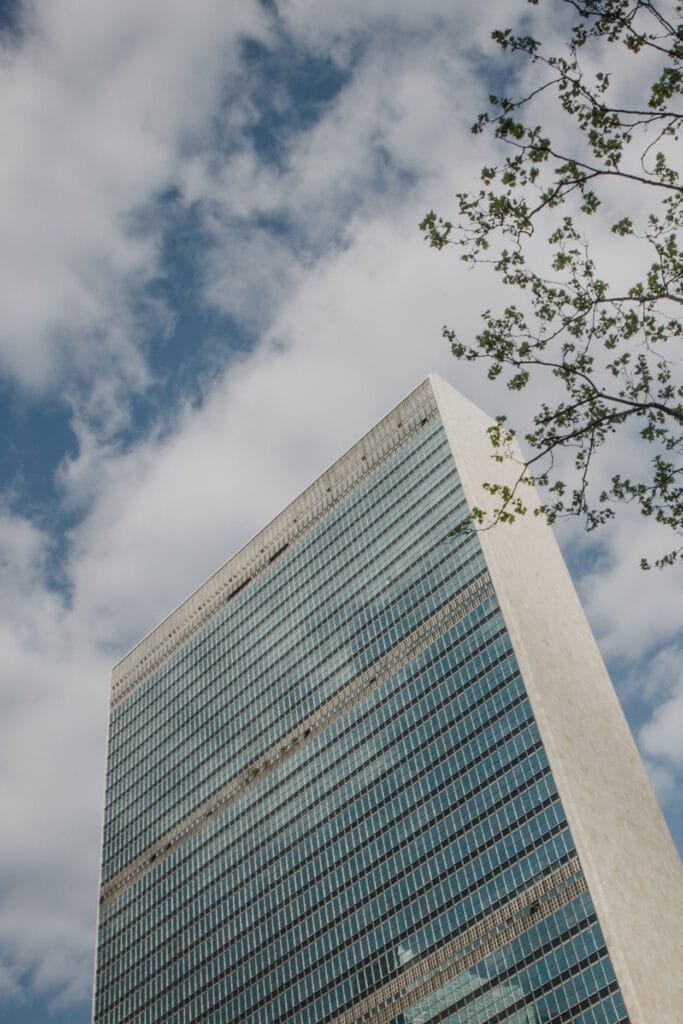
Human rights groups have already called upon the United Nations to intercede and conduct a fair and transparent investigation. There are already a number of UN instruments, such as the Working Group on Disappearances and the Special Rapporteur for non-judicial executions, who might launch investigations and reports.

While UN findings may not immediately appear to be the most robust of responses to this apparent outrage, Mohammed bin Salman and the Saudi regime have demonstrated consistently that they are sensitive to outside criticism, as evidenced by the severing of diplomatic ties with Canada. Any UN finding critical of bin Salman and Saudi Arabia would be a significant blow to their prestige.

The hit squad itself must also now become a legal target. The US enacted its global Magnitsky Act in 2016, enabling the US government to impose sanctions after human rights abuses by government officials around the world. They could stop any of the men gaining visas to travel to the US and ask for support from the EU. This would drastically reduce the movement of its targets and cause significant financial hardship.

This article was first published in The Independent on 22 October 2018, you can view the original article here.


Contact details

If you would like to speak with us about our areas of practice or anything else please contact us via the form linked below.

Contact Us

About the Authors

Ben Keith Barrister

Ben Keith is a co-founder of IHR Advisors and an internationally recognised lawyer specialising in INTERPOL Red Notice challenges, extradition, international human rights law and asylum. He is the co-author of Interpol, Law and Practice (Sweet & Maxwell, 2026). He is co-editor of Red Notice Monitor, the leading public resource on INTERPOL Red Notice abuse and the practice of INTERPOL’s Commission for the Control of Files.

Ben represents clients across every region in INTERPOL Red Notice and Diffusion challenges before the Commission for the Control of Files. He has secured the deletion of Notices issued by states including Russia, China, the United Arab Emirates, Turkey, Belarus, Iran and Venezuela, in cases involving journalists, opposition political figures, refugees, human rights defenders and business figures targeted in commercial and political disputes. He is the author of the INTERPOL chapter in The Practitioner’s Guide to Global Investigations (Global Investigations Review, 2026).

Ben has appeared as counsel before the European Court of Human Rights Grand Chamber, the UK Supreme Court, the African Commission on Human and Peoples’ Rights, the Inter-American Commission on Human Rights, the UN Working Group on Arbitrary Detention, and the UN Committee Against Torture. He is a member of the List of Counsel for the International Criminal Court and the Kosovo Specialist Chambers in The Hague.

He regularly acts for politically exposed persons, journalists, human rights defenders and high net worth individuals facing extradition, INTERPOL Notices and other instruments of transnational repression. He provides legal commentary to national and international media including the Guardian, The Times, the Financial Times, The Telegraph, the BBC, Sky News, CNN, CBS 60 Minutes, The Economist, Politico and Al Jazeera.

Ben is ranked Star Individual in Chambers and Partners and a leading individual in The Legal 500 for extradition. He practises from 5 St Andrew’s Hill in London.

View Ben Keith's profile
Rhys Davies Barrister

Rhys Davies is a co-founder of IHR Advisors and an internationally recognised lawyer specialising in INTERPOL Red Notice challenges, international criminal law and international human rights law. He is the co-author of Interpol, Law and Practice (Sweet & Maxwell, 2026). He is co-editor of Red Notice Monitor, the leading public resource on INTERPOL Red Notice abuse and the practice of INTERPOL’s Commission for the Control of Files.

Rhys co-authored the report Undue Influence: the UAE and INTERPOL with Sir David Calvert-Smith, examining the systemic misuse of INTERPOL’s Notice and Diffusion systems by the United Arab Emirates and the implications for INTERPOL’s governance. He represents clients in INTERPOL Red Notice challenges before the Commission for the Control of Files, with particular focus on cases involving Middle Eastern and Central Asian states, and on the position of refugees, journalists and political dissidents targeted through INTERPOL by their states of origin.

Rhys has significant experience of in-country legal advice and assistance, most recently in the West Bank, and a specific interest in the Middle East. He is a member of the List of Counsel for the International Criminal Court, the Kosovo Specialist Chambers, and the Special Tribunal for Lebanon. He regularly speaks at, and chairs, events at the United Nations Human Rights Council in Geneva and at the House of Commons on matters of international law.

Rhys is the author of numerous articles on INTERPOL Red Notice practice and on justice in the Middle East, and is in demand as a commentator on international human rights. He provides legal commentary to national and international media including The Times, the Guardian, the Independent, the Financial Times, CBS 60 Minutes, Sky News, City AM and Al Jazeera.

Rhys is recommended as a leading individual in The Legal 500. He practises from Temple Garden Chambers in London and The Hague.

View Rhys Davies's profile