Two human-rights barristers on how to address systemic abuse by authoritarian states

The article was originally published on 9 May 2025 in The Economist and can be viewed here.

For more than 100 years, Interpol has played a vital role in combating serious international crime, from terrorism to human trafficking. But the international police organisation, made up of 196 member countries, is now plagued by issues that undermine international co-operation among law enforcers and allow authoritarian states to weaponise its systems for their own ends. The recent appointment as secretary-general of Valdecy Urquiza, a Brazilian police commissioner, offers an opportunity for serious reform. Though his predecessor, Jürgen Stock, left Interpol in better shape than he found it, Mr Urquiza will need to go further to deal with its deep-rooted problems.

The first of these is governance. The secretary-general, the full-time leader of the organisation, is assisted by an executive committee—essentially a board of directors chaired by a president. The current president is Ahmed Naser Al-Raisi, a major-general from the United Arab Emirates (UAE), who is under investigation in several countries over allegations of complicity in torture (which he denies). The 13-member executive committee includes representatives from China and Turkey, two of the most prolific abusers of Interpol policy.

At the most recent executive-committee elections, democratic countries failed to co-ordinate, putting forward numerous candidates and splitting their potential votes, while autocratic states voted as a bloc. The result was predictable: states with dismal human-rights records gained more influence within the organisation. In future, democratic nations must work together and unite around fewer candidates to allow the governance of Interpol to be geared towards fairness, independence and efficiency.

Interpol’s funding model exacerbates its governance challenges. Operating on a modest annual budget of around €200m ($225m), the organisation relies on three funding streams: statutory contributions from member countries (roughly based on economic size), in-kind donations of police officers, and voluntary contributions. Just before Mr al-Raisi was elected president, the UAE donated €50m, or roughly a quarter of Interpol’s annual budget, through an arms-length NGO. The funding model should be revised to reduce vulnerability to handouts that could be seen as influence-buying. Donations would still be welcome but they must never be in exchange for perceived favours or public-relations opportunities. Statutory contributions should be increased to make up the likely shortfall.

Authoritarian states routinely use Interpol mechanisms as a way to subdue dissidents. For example, Turkey misuses the Stolen/Lost Travel Documents system to target opponents of Recep Tayyip Erdogan’s repressive regime. By reporting a dissident’s passport as lost or stolen, Turkish authorities ensure targets are denied entry by other countries and potentially returned to Turkey, where they face political persecution and detention in horrendous conditions.

To read the full article on The Economist’s website, click here.

Contact details

If you would like to speak with us about our areas of practice or anything else please contact us via the form linked below.

Contact Us

About the Authors

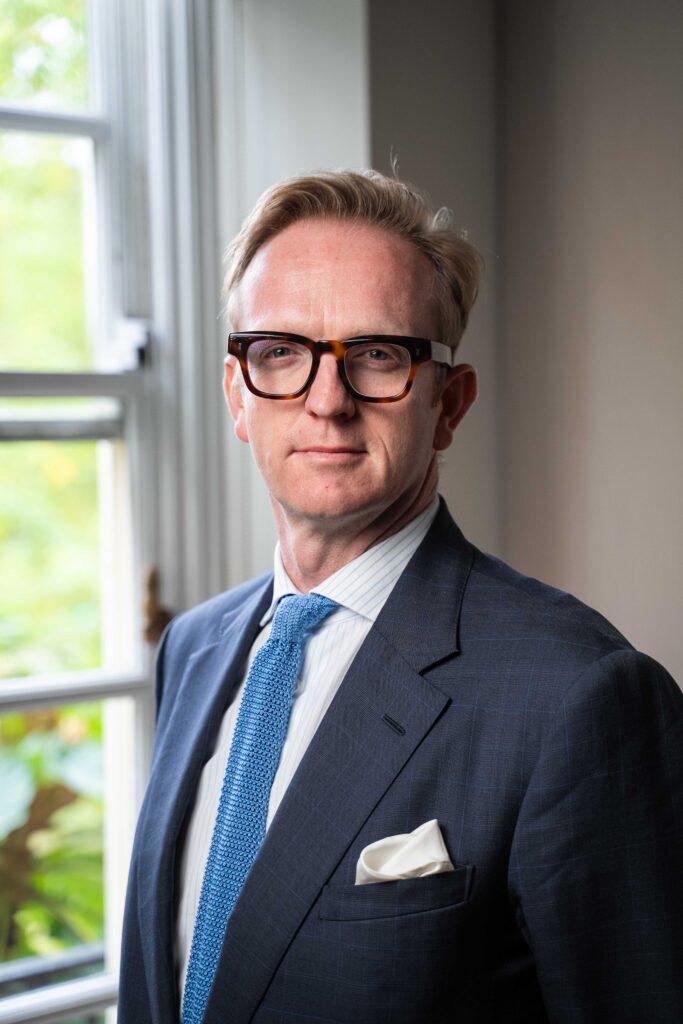
Ben Keith Barrister

Ben Keith is a co-founder of IHR Advisors and an internationally recognised lawyer specialising in INTERPOL Red Notice challenges, extradition, international human rights law and asylum. He is the co-author of Interpol, Law and Practice (Sweet & Maxwell, 2026). He is co-editor of Red Notice Monitor, the leading public resource on INTERPOL Red Notice abuse and the practice of INTERPOL’s Commission for the Control of Files.

Ben represents clients across every region in INTERPOL Red Notice and Diffusion challenges before the Commission for the Control of Files. He has secured the deletion of Notices issued by states including Russia, China, the United Arab Emirates, Turkey, Belarus, Iran and Venezuela, in cases involving journalists, opposition political figures, refugees, human rights defenders and business figures targeted in commercial and political disputes. He is the author of the INTERPOL chapter in The Practitioner’s Guide to Global Investigations (Global Investigations Review, 2026).

Ben has appeared as counsel before the European Court of Human Rights Grand Chamber, the UK Supreme Court, the African Commission on Human and Peoples’ Rights, the Inter-American Commission on Human Rights, the UN Working Group on Arbitrary Detention, and the UN Committee Against Torture. He is a member of the List of Counsel for the International Criminal Court and the Kosovo Specialist Chambers in The Hague.

He regularly acts for politically exposed persons, journalists, human rights defenders and high net worth individuals facing extradition, INTERPOL Notices and other instruments of transnational repression. He provides legal commentary to national and international media including the Guardian, The Times, the Financial Times, The Telegraph, the BBC, Sky News, CNN, CBS 60 Minutes, The Economist, Politico and Al Jazeera.

Ben is ranked Star Individual in Chambers and Partners and a leading individual in The Legal 500 for extradition. He practises from 5 St Andrew’s Hill in London.

View Ben Keith's profile
Rhys Davies Barrister

Rhys Davies is a co-founder of IHR Advisors and an internationally recognised lawyer specialising in INTERPOL Red Notice challenges, international criminal law and international human rights law. He is the co-author of Interpol, Law and Practice (Sweet & Maxwell, 2026). He is co-editor of Red Notice Monitor, the leading public resource on INTERPOL Red Notice abuse and the practice of INTERPOL’s Commission for the Control of Files.

Rhys co-authored the report Undue Influence: the UAE and INTERPOL with Sir David Calvert-Smith, examining the systemic misuse of INTERPOL’s Notice and Diffusion systems by the United Arab Emirates and the implications for INTERPOL’s governance. He represents clients in INTERPOL Red Notice challenges before the Commission for the Control of Files, with particular focus on cases involving Middle Eastern and Central Asian states, and on the position of refugees, journalists and political dissidents targeted through INTERPOL by their states of origin.

Rhys has significant experience of in-country legal advice and assistance, most recently in the West Bank, and a specific interest in the Middle East. He is a member of the List of Counsel for the International Criminal Court, the Kosovo Specialist Chambers, and the Special Tribunal for Lebanon. He regularly speaks at, and chairs, events at the United Nations Human Rights Council in Geneva and at the House of Commons on matters of international law.

Rhys is the author of numerous articles on INTERPOL Red Notice practice and on justice in the Middle East, and is in demand as a commentator on international human rights. He provides legal commentary to national and international media including The Times, the Guardian, the Independent, the Financial Times, CBS 60 Minutes, Sky News, City AM and Al Jazeera.

Rhys is recommended as a leading individual in The Legal 500. He practises from Temple Garden Chambers in London and The Hague.

View Rhys Davies's profile