To do so would undermine the international legal order, no matter how unfair the case is

Ben Keith comments inThe Times on 4 June 2020

Harry Dunn’s family have been sold false hope. Anne Sacoolas will never be extradited.

An Interpol red notice requesting the extradition of the American spy for allegedly killing the teenager with her car is a red herring. His mother, Charlotte Charles, recently implored in The Washington Post for Ms Sacoolas to come back to Britain and “face up to what she has done and receive justice according to law”.

If the American were suddenly overcome with a sense of justice she might do this of her own volition, but the red notice will not force her.

The extradition request by Britain was almost immediately turned down by the US State Department, which said that compliance would be an “egregious abuse”.

The Dunn family have done everything possible to keep the story in the public eye and they have clearly won over public opinion. However, the legal arguments behind them will crumble.

Ms Sacoolas’s defence of diplomatic immunity hinges on her husband’s role as a US civil servant stationed at RAF Croughton in Northamptonshire. As a result of an old agreement between Britain and the US, all personnel on the base have diplomatic immunity and so do their families.

That is standard procedure and is also enshrined in the Vienna Convention, for good reason. Leverage over diplomats can easily be obtained through pressure on their families. Diplomatic immunity protects diplomats from this kind of political interference.

The confusion at the highest levels of the government surrounding the issue of diplomatic immunity is concerning and it is presumably why the Dunn family are also attempting to bring a private prosecution against Dominic Raab, the foreign secretary, for misconduct in a public office, a legal challenge that is unlikely to succeed.

Although Ms Sacoolas no longer has diplomatic immunity as she is back on American soil, the question in a court would be whether she had the immunity at the time of the accident. US officials say that she did. Diplomatic immunity is something that can only be lifted by agreement or through a judge. The US has made it clear it will not agree.

There have been many calls for the US to make an exception. Yet the reality is that they will not and, for all the unfairness of the situation, in order to uphold international law they should not bow to that pressure.

To do so undermines the international legal order and makes it far easier for other countries to ask for the same special treatment. There are situations where immunity is waived — for murder, robbery and other pre-meditated serious crimes — but it won’t be waived in this case.

As awful as it is, this is not an abuse of the diplomatic process. This case is a sad byproduct of a fundamental tenet of international law and diplomacy, which means that the only way Ms Sacoolas will face justice will be if she voluntarily returns. And that is extremely unlikely.

This article was first published in The Times on 4 June 20210and can be accessed in full here.

Contact details

If you would like to speak with us about our areas of practice or anything else please contact us via the form linked below.

Contact Us

About the Authors

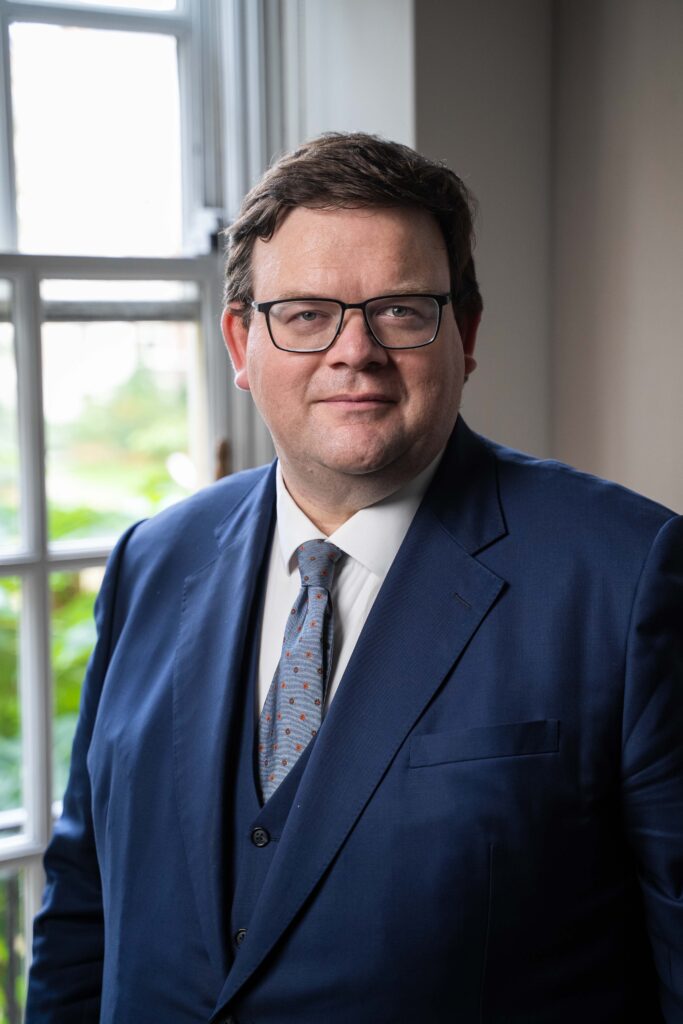
Ben Keith Barrister

Ben Keith is a co-founder of IHR Advisors and an internationally recognised lawyer specialising in INTERPOL Red Notice challenges, extradition, international human rights law and asylum. He is the co-author of Interpol, Law and Practice (Sweet & Maxwell, 2026). He is co-editor of Red Notice Monitor, the leading public resource on INTERPOL Red Notice abuse and the practice of INTERPOL’s Commission for the Control of Files.

Ben represents clients across every region in INTERPOL Red Notice and Diffusion challenges before the Commission for the Control of Files. He has secured the deletion of Notices issued by states including Russia, China, the United Arab Emirates, Turkey, Belarus, Iran and Venezuela, in cases involving journalists, opposition political figures, refugees, human rights defenders and business figures targeted in commercial and political disputes. He is the author of the INTERPOL chapter in The Practitioner’s Guide to Global Investigations (Global Investigations Review, 2026).

Ben has appeared as counsel before the European Court of Human Rights Grand Chamber, the UK Supreme Court, the African Commission on Human and Peoples’ Rights, the Inter-American Commission on Human Rights, the UN Working Group on Arbitrary Detention, and the UN Committee Against Torture. He is a member of the List of Counsel for the International Criminal Court and the Kosovo Specialist Chambers in The Hague.

He regularly acts for politically exposed persons, journalists, human rights defenders and high net worth individuals facing extradition, INTERPOL Notices and other instruments of transnational repression. He provides legal commentary to national and international media including the Guardian, The Times, the Financial Times, The Telegraph, the BBC, Sky News, CNN, CBS 60 Minutes, The Economist, Politico and Al Jazeera.

Ben is ranked Star Individual in Chambers and Partners and a leading individual in The Legal 500 for extradition. He practises from 5 St Andrew’s Hill in London.

View Ben Keith's profile
Rhys Davies Barrister

Rhys Davies is a co-founder of IHR Advisors and an internationally recognised lawyer specialising in INTERPOL Red Notice challenges, international criminal law and international human rights law. He is the co-author of Interpol, Law and Practice (Sweet & Maxwell, 2026). He is co-editor of Red Notice Monitor, the leading public resource on INTERPOL Red Notice abuse and the practice of INTERPOL’s Commission for the Control of Files.

Rhys co-authored the report Undue Influence: the UAE and INTERPOL with Sir David Calvert-Smith, examining the systemic misuse of INTERPOL’s Notice and Diffusion systems by the United Arab Emirates and the implications for INTERPOL’s governance. He represents clients in INTERPOL Red Notice challenges before the Commission for the Control of Files, with particular focus on cases involving Middle Eastern and Central Asian states, and on the position of refugees, journalists and political dissidents targeted through INTERPOL by their states of origin.

Rhys has significant experience of in-country legal advice and assistance, most recently in the West Bank, and a specific interest in the Middle East. He is a member of the List of Counsel for the International Criminal Court, the Kosovo Specialist Chambers, and the Special Tribunal for Lebanon. He regularly speaks at, and chairs, events at the United Nations Human Rights Council in Geneva and at the House of Commons on matters of international law.

Rhys is the author of numerous articles on INTERPOL Red Notice practice and on justice in the Middle East, and is in demand as a commentator on international human rights. He provides legal commentary to national and international media including The Times, the Guardian, the Independent, the Financial Times, CBS 60 Minutes, Sky News, City AM and Al Jazeera.

Rhys is recommended as a leading individual in The Legal 500. He practises from Temple Garden Chambers in London and The Hague.

View Rhys Davies's profile