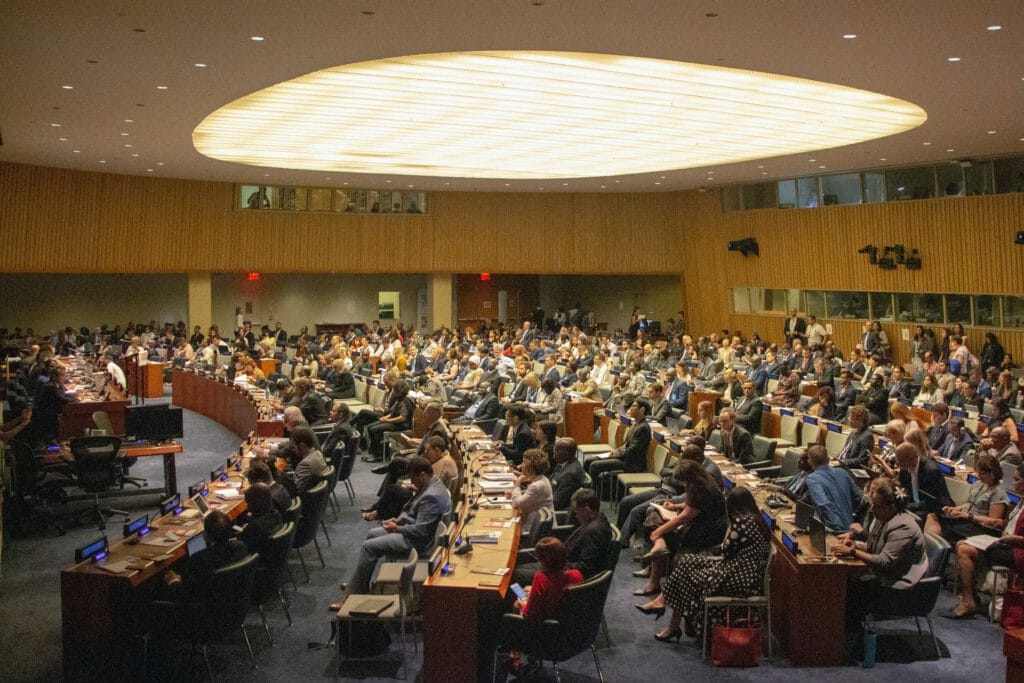
On Thursday 9 July 2026, IHR Advisors will speak at Leiden University’s Grotius Centre for International Legal Studies, at a public seminar on the political misuse of INTERPOL and international police cooperation. The event, When Policing Becomes Political — International Police Cooperation in the Era of Spin Dictators, is co-sponsored by IHR Advisors and runs from 18:00 at the Spui Campus in The Hague.
The two panels
The evening is built around two discussions, each followed by questions from the floor and a reception.
Panel 1, Between Cooperation and Complicity, examines states’ obligations under international law when they act on foreign police and judicial requests.
- Dr Eelco van der Maat, Leiden University
- Cristian González Ruiz, IHR Advisors
- Ben Keith, 5 St Andrew’s Hill
- Moderator: María Manuela Márquez V., Leiden University
Panel 2, Voices Under Threat, turns to human rights defenders and political opponents pursued through transnational repression.
- Rhys DaviesTemple Garden Chambers
- Prof. Carsten Stahn, Leiden University
- Dr Misha Plagis, Council of Europe
- Moderator: Dr Robert Heinsch, Leiden University
Transnational repression is the practice of authoritarian governments reaching across borders to silence, surveil, harass or detain their critics. The seminar’s title nods to the “spin dictators” described by the political scientists Sergei Guriev and Daniel Treisman: rulers who prefer the appearance of legality to open violence. An INTERPOL Red Notice suits that method well. It travels through a respected multilateral channel, it carries the authority of a criminal justice request, and it can put a person at risk of arrest in any of the organisation’s 196 member countries.
The trouble is that the same system built to catch fugitives is turned on journalists, opposition figures and exiled businesspeople. A charge of fraud or embezzlement is filed at home. A Red Notice or a diffusion follows. The target then faces arrest at a border or a frozen bank account, long before any court tests whether the underlying case is genuine. INTERPOL’s own rules prohibit notices that are predominantly political, but enforcement falls to the Commission for the Control of INTERPOL’s Files, and the burden of challenge sits with the individual.
That is the gap the two panels probe. The first asks what a requested state owes, under the European Convention on Human Rights and general international law, before it lends its police and its courts to another government. The second keeps the focus on the people at the sharp end, and on the fear that outlasts any single arrest. Transnational repression is not mainly about detention. It is about making critics calculate the cost of speaking at all.
Practical details
Date: Thursday 9 July 2026
Time: 18:00 to 20:15, followed by a reception until 21:00
Venue: Auditorium, Spui Campus, Spui 5, 2511 BL, The Hague
Cost: Free; registration closes on 8 July
Register through the Leiden University form.
With thanks to the Grotius Centre for International Legal Studies for hosting and for bringing academics and practitioners into one room. Full details and registration are on the Leiden University event page.
If a Red Notice or a politically driven prosecution is affecting you or someone you advise, contact us in confidence.